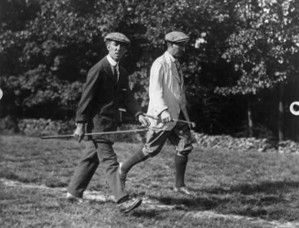
Early golfers relied on experience, course knowledge, and traditional equipment long before GPS devices, rangefinders, and modern performance technology became part of the game.
Every generation of golfers has experienced a technology that changed the way the game is played. Decades ago, the transition from persimmon drivers to metal woods fundamentally reshaped equipment design. Larger clubheads, improved forgiveness, and new materials gave golfers capabilities that had once seemed out of reach.
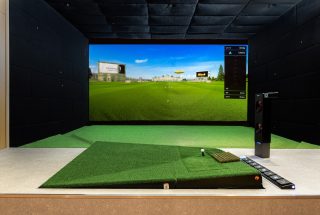
Years later, GPS devices changed the way players managed the golf course. Instead of relying solely on sprinkler heads, yardage books, or course markers, golfers suddenly had distances to the front, center, and back of every green in the palm of their hand. Laser rangefinders followed, bringing a new level of precision. For many players, exact yardages quickly became part of every pre-shot routine. More recently, launch monitors transformed practice by making professional-level performance data accessible to everyday golfers. Information that was once reserved for tour professionals and elite instructors is now available at driving ranges, fitting studios, and even home simulators around the world.
At the time, each of these technologies was viewed by some as unnecessary. Today, they have become a normal part of the game.
That raises an interesting question: What comes next?
The Pattern Behind Golf Innovation
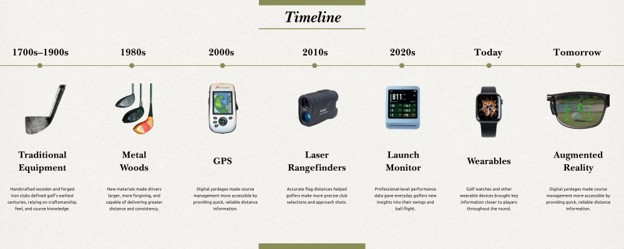
Figure 2. Timeline of major innovations in golf equipment from the 1700s to today.
The most influential advances in golf have shared a common theme. They haven’t simply introduced new technology; they’ve reduced uncertainty. Metal woods made the driver more forgiving. GPS simplified course management. Launch monitors gave golfers a clearer understanding of why the ball behaves the way it does. Each innovation helped players make better decisions, whether during practice or on the course. As technology continues to evolve, the next step may not be collecting more information. Instead, it may be changing how that information is delivered.
From Data Collection to Decision Support
Today’s golfers have access to more information than ever before. GPS devices provide instant yardages, launch monitors deliver detailed swing and ball flight data, and mobile apps put course management, weather, and performance tracking into a golfer’s pocket. While this data is valuable, it often requires golfers to pause, switch between devices, or interpret multiple pieces of information before making a decision. As a result, the conversation around golf technology is beginning to shift from collecting more data to making that information easier to use.

Figure 3. Golfers wearing sleek display sunglasses expressing seamless wearable tech.
The Rise of Wearable Technology
Wearables are already beginning to reshape other industries. Smartwatches have changed the way people access notifications, navigation, health metrics, and communication. In golf, wearable devices have primarily focused on GPS distances, score tracking, and fitness data. The next generation of wearables will move beyond displaying information and towards delivering context within the player’s natural field of view.
Could Augmented Reality Become Golf’s Next Equipment Category?
Unlike general-purpose smart glasses designed for communication or media capture, golf-specific AR systems have the potential to deliver contextual information during play. Distances, hazards, environmental conditions, and course visualization could all be presented without interrupting the rhythm of the round. Whether augmented reality ultimately becomes as common as GPS watches or rangefinders remains to be seen. Like many technologies before it, widespread adoption will depend on whether it provides meaningful value without adding complexity. History suggests that successful golf technologies don’t replace the fundamentals of the game; they remove friction from them.
Looking Ahead
Golf has always embraced innovation when it helps players enjoy the game, make better decisions, or improve performance. Each generation of technology has changed not only the equipment golfers use, but also the way they experience the game. The next chapter may be less about providing more data and more about making it easier to use. Companies such as BirdiLens are exploring this future through golf-specific augmented reality wearables designed to keep players focused on the course while delivering real-time information when it matters most. Whether AR becomes the next major equipment category or simply another step in golf’s technological evolution, one thing appears increasingly clear: the future of golf technology is moving toward making better decisions that feel more intuitive.
Follow BirdiLens.com for more information as we continue to explore what the next generation of golf technology could look like. contact@birdilens.com
Written by Cash McFarlane
Image Credits
Figure 1: Library of Congress, Prints & Photographs Division.
Figure 2: Illustration by Cash McFarlane
Traditional Equipment: Jeff Ellis “The Oldest Iron, The Troon Clubs & Early Club Evolution”
Metal Woods: Wikimedia Commons File:Various golfwoods.jpg
GPS: Wikimedia Commons File:2008LeisureTaiwan Day1 Sonocaddie V300 Golf GPS.jpg.
Laser Rangefinder: Europeana Avstandsmåler.
Launch Monitor: Tim Witzdam Launch Monitor
Wearables: Daniel Korpai Smart Watch
Figure 3: Courtesy of BirdiLens.