I Can See Why Golfers Love the New LM1 Launch Monitor from Shot Scope
By MIKE BAILEY
A reliable launch monitor for $200 might seem too good to be true, but that’s exactly what the Scottish company Shot Scope, known for its array of products that include GPS and laser measuring devices and data tracking, has done with its revolutionary LM1.
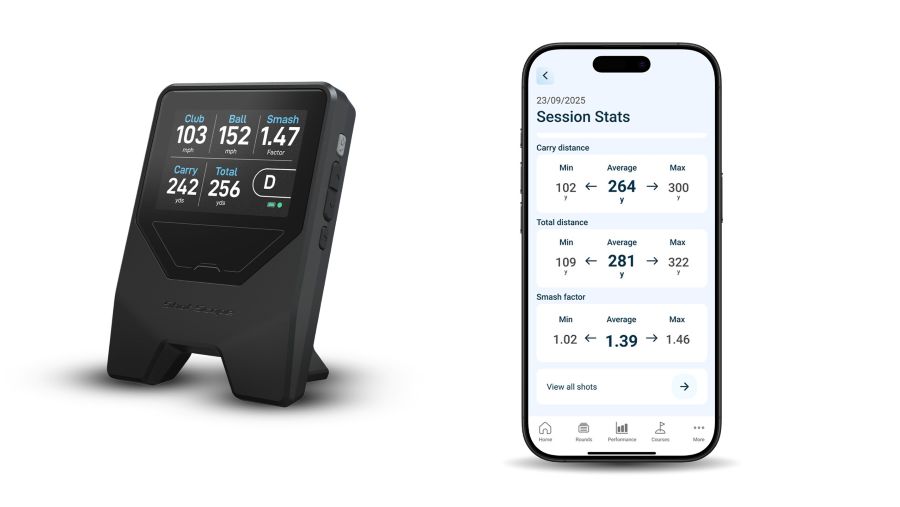
No, the radar-based LM1 launch monitor doesn’t measure spin, nor does it give you path or launch angle. But it accurately measures carry distance, total distance, ball speed, clubhead speed, and smash factor (calculated from ball speed and clubhead speed). For most golfers, these are the numbers that matter the most. How far am I hitting the ball, and how solidly am I hitting it?
And it measures it quickly.
Most of all, everything about the LM1 is easy. It’s easy to set up, easy to read, easy to put in your golf bag, doesn’t take long to charge, and it’s not complicated.
My Experience so far with the LM1
When you unbox the Shot Scope LM1, it comes with a carrying case, a USB charging cable, and an instruction booklet. Truth be told, I was so excited to check it out that I didn’t even bother with the instruction booklet at first. That’s how intuitive the LM1 is to use. (But yes, read the instructions. They are laid out well, brief, and easy to understand.)
I started by plugging it into a USB outlet. In less than two hours, it was fully charged. Then I turned it on just to see the display, which is large and easy to read. Now it was off to the course.
Quickly, I figured out the buttons on the right side. The top one turns it on and off if you hold it down, and it also makes selections on the screen with quicker presses. The next two buttons control up and down to help you toggle through different features. And the last button is a back button to go to the previous screen.
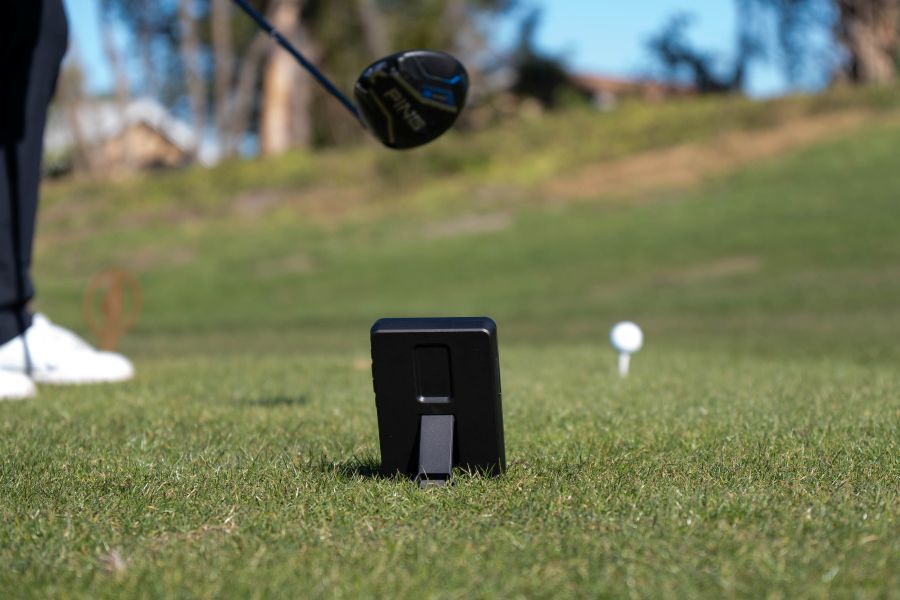
I took it out on the range, set it up between 4 and 5 feet behind the ball, toggled to a club selection (my first one was 9-iron (and you do have to select your club, which is easy) and hit a shot. Before I could even look back, there was my information on the screen. I couldn’t believe how fast the display was. I’ve used Doppler radar launch monitors before, and they tend to be pretty fast, but this was definitely the fastest I’ve seen. It seemed instantaneous.
Which brings me to the next observation. Radar-only launch monitors can be a bit glitchy sometimes. I’ve had mixed results with other brands. Some can be very temperamental, requiring very precise measurements from the ball to the monitor, and that everything sit level on the ground. Others seem to throw in some wacky numbers. In this case, I just put the LM1 on the ground behind me, and it read every single shot.
But not only did it do that, but there was consistency with each shot. If I hit a low hook, the carry distance and overall distance measurements reflect that. If I hit a shot a bit fat, once again, the numbers showed shorter distances, and obviously a lower smash factor. And my clubhead speed with each swing was within two or three miles of each other, including with the driver, which matched what I’ve seen on launch monitors that cost 20 times as much as the LM1.
 Shot Scope LM1 is So Versatile
I also like that you can use the LM1 in three modes –practice, on course, and speed training. Practice is where I will use it most, of course. But you don’t have to be on a range. If you have a net at home, for example, it does a rather good job of reading those shots as well.
I also love that you can use it on the course. But unlike some other launch monitors, because the LM1 is so quick to display your results and so light, it doesn’t really interfere with your round if you’re looking to measure shots while you play, especially if you’re playing with others. And this is valuable. Because, as we all know, the driving range game is often different from what you do on the course.
The speed training aspect is also really cool. I had never done speed training with a launch monitor before, but I can see the value in it now. The setup is a little different than practice (you place the LM1 a little farther back). What’s interesting about this is that you see the faster numbers not just from swinging harder, but from better sequencing. So it helps groove a better swing. Again, using a launch monitor really allows you to assess whether your speed training is working or not.
Finally, there’s a history tab, which means you can go back to your sessions to review your numbers. More than that, you can download your history via Bluetooth to the free Shot Scope app, which means you can analyze your data. From there, you can see your trends, which clubs you hit best, what your average distances are with each club, etc. And that, in turn, can help you make better decisions on the golf course.