There’s no doubt that golfers can get better with practice. But practice without feedback, practice can be futile as so many golfers find out. You have to practice with a purpose, which is the message that Jon Sherman, the founder of Practical Golf, sends through his newsletters, website, and podcasts.
Sherman, who helps golfers improve through technology (in many cases to help reinforce instruction after they leave the lesson tee), says that a little technology can go a long way depending on how sophisticated a golfer wants to get. From the basic radar-based launch monitors that start out around $200 to camera based systems that can be used on the range or indoors, there’s all sorts of tools available that can help golfers improve their game.
“A personal launch monitor gives golfers better practice feedback and makes practice more engaging and memorable,” Sherman says. “It allows golfers to challenge themselves instead of just hitting balls aimlessly. And it helps them understand their actual club distances and shot patterns.”
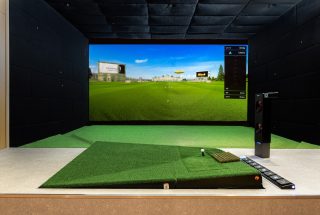
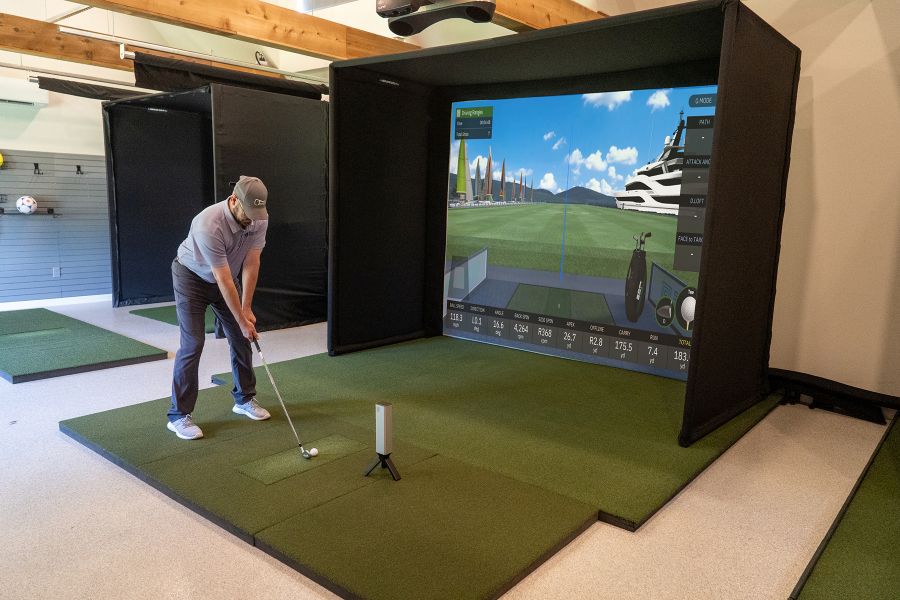
Sherman has kept a close eye on the latest in launch monitor technology and advancements. He serves as a consultant for The Indoor Golf Shop, based in Celina, Texas which includes a full selection of launch monitors and simulators from companies like Trackman, Uneekor, Garmin, Bushnell, Flightscope, ProTee, Full Swing, and Tru Golf. The company also offers projectors, wall padding, golf mats, and many other products to help you set up your own sim at home.
At the very least, golfers should consider one of the newer basic launch monitors on the market. “When someone’s looking to purchase one of these things, they have to think about what are you going to actually use it for,” says Sherman. “I would say if you’re on a budget and you just want basic numbers, the Voice Caddies, Shot Scope LM1, PRGRs are fine.”
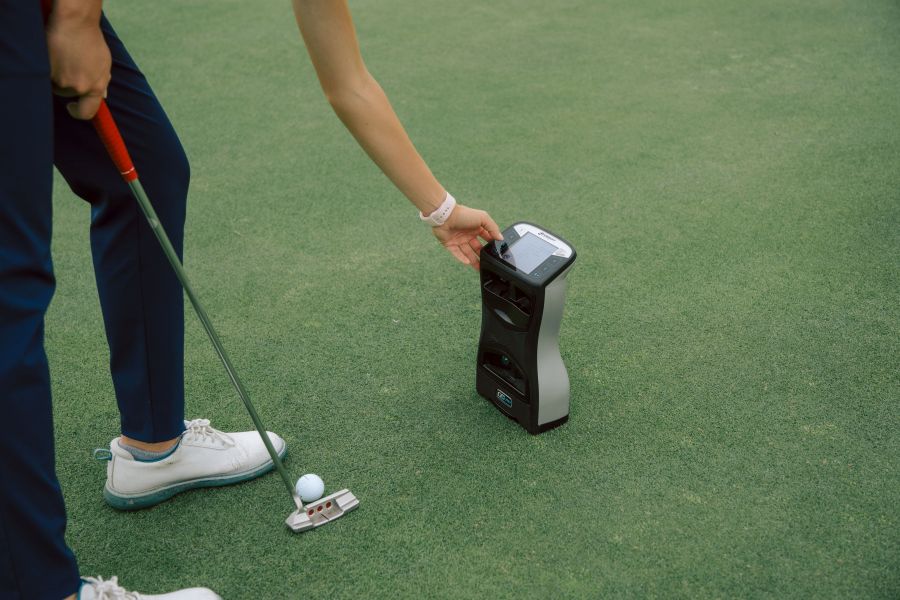
A basic launch monitor, he said, can be especially helpful for working on your wedge game, trying to dial in different distances when you practice on the range. Otherwise you’re just guessing. And it certainly helps golfers work on basics like increasing clubhead speed, making more solid contact, and learning distances for different clubs.
But if you want to figure out how you’re flighting the ball, your launch angles and descent angles, spin rates (which can be particularly important for getting the most out of your driver), and clubhead path, golfers will have to invest a little more. Fortunately, there are some great budget options there, too.
“For example, if I wanted to use it to get better, especially outdoors, I would lean more toward something that has integrated software like a Rapsodo MLM2 Pro because they’re actually collecting dispersion data that’s going to be stored long term. And more importantly, there are practice schemes and drills that are gamified,” Sherman says.
The Rapsodo MLM2Pro is just $600 for the basic unit, which can be used outdoors by itself. And you can put together an indoor simulator package with it for well under $2,000.
Square Golf has a growing collection of budget options, too, including the Square Golf launch monitor, which is just $700, but it isn’t designed to be used outdoors. The new Square Golf Omni, which retails for just $1,600, however, has twice as many cameras and can be used outdoors as well as indoors. It’s accurate and comparable to monitors that cost thousands more.
Of course, if you’re willing to spend more, it just keeps getting better. The Trackman 4 at more than $25,000 would be the gold standard, while the Foresight GC3 or more expensive GCQuad, Flightscope Mevo Gen 2, Skytrak ST Max, Garmin R50, and Bushnell Launch Pro represent a wide variety of options in price with more sophisticated software and hardware.
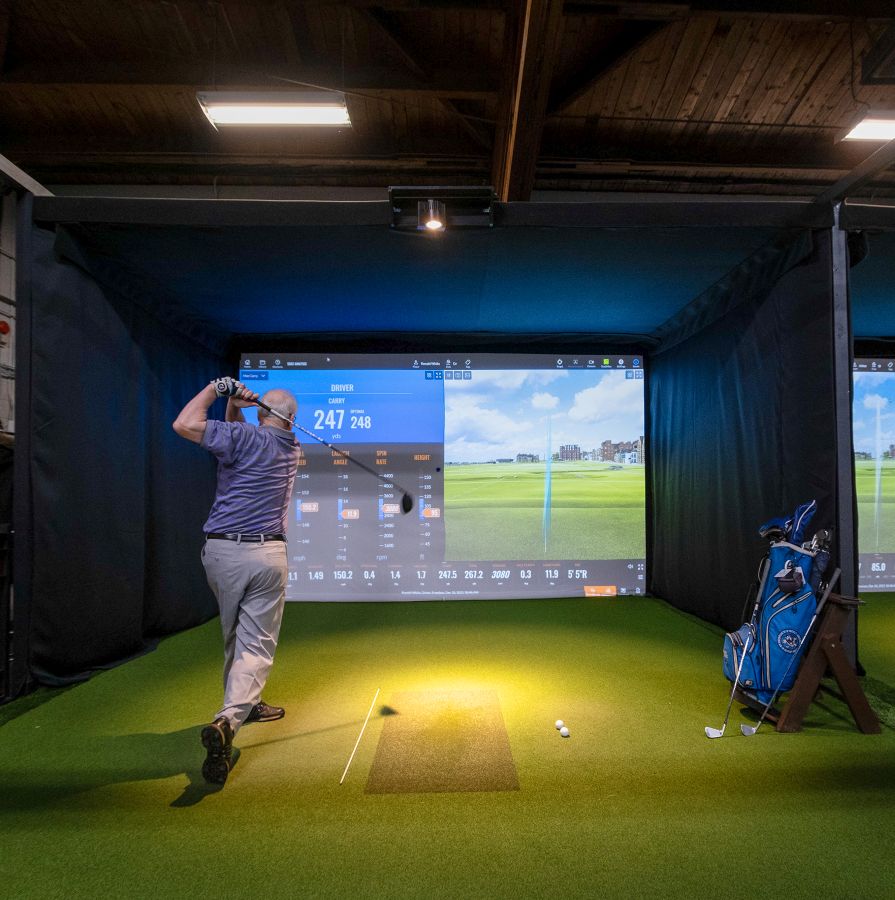
And using a launch monitor isn’t just about improving your swing, but also about knowing your tendencies and how to use that on the course.
“More advanced software can help golfers test dispersion patterns with different clubs,” Sherman says. “And dispersion testing can improve tee shot strategy and approach shot strategy.”
The bottom line is there is so much helpful feedback a golfer can tap into, and there are solutions for every budget. While a lot of golfers don’t want to take a deep dive, even getting basic information while practicing can help.
“Work backwards from your budget,” Sherman says. “But I think getting a layer of software on top of just the basic numbers is something that is worth investing in.”