

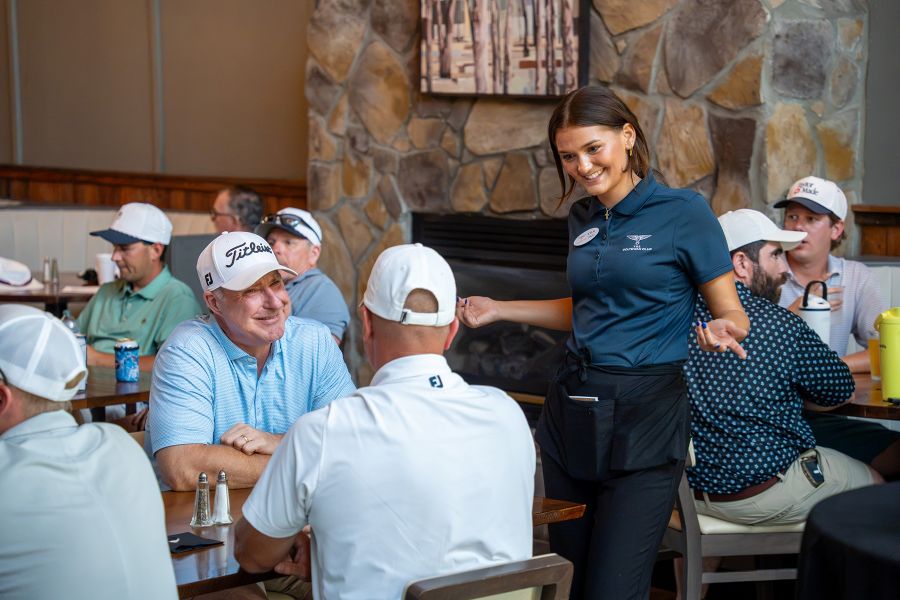
For decades, the private country club business revolved around a relatively simple value proposition: exceptional golf, social prestige, and a predictable roster of mature, established members who used the club primarily for recreation.
That model has changed drastically throughout this decade and, frankly, for the better.
In the years since the pandemic, private clubs across America have undergone a steady transformation. Golf remains vital – perhaps more vital than ever and across all demographics – but increasingly, it is just one component of a broader lifestyle ecosystem many clubs now excel at providing. Today’s members gravitate to clubs that best serve as extensions of their homes, workplaces, fitness centers, social networks, and family support systems.
According to Amy Buchanan, Bobby Jones Links’ Vice President of Revenue Management, the demand remains remarkably strong — even if the dynamics have leaped headlong into the 21st Century.
“Trends in what people need from their local club tend to be really market-specific,” she says. “The desire to connect with other people in your demographic with similar interests is evident all over the country. In more than 20 years in this business, I’ve never seen people so familiar and comfortable with the private club concept. You’re not educating or selling them on the club, you’re more demonstrating how your club is the best fit for how their family lives and thrives,” Buchanan said.
That comfort represents a dramatic cultural shift. Not long ago, many clubs spent as much energy overcoming perceptions of exclusivity as they did selling memberships. Today, golf itself has become more approachable, attracting a wider demographic than ever before.
“Golf has become cooler, more accessible, and more woven into our lifestyles, and people are more inclined to identify with golfing culture these days,” she says. “At the same time, you’ve got the explosion of racquet sports, wellness programming, and all of these additional experiences clubs are offering. People are talking about clubs differently now and joining at record pace in many markets.”

Beyond Golf: Leveraging Time, Not Tee Times
The most successful clubs have realized they are no longer competing solely on the quality of their golf course and stateliness of the clubhouse.
Instead, they are competing for something far more valuable: time.
“The club wins when it becomes the answer,” she says. “If a club can create efficiency between someone’s business life, family life, social life, recreation, and wellness, that decision to join and spend a lot of quality time at the club with your family and other families becomes much easier.”
If it sounds like today’s membership proposition is fundamentally different from what it was a generation ago, it is.
“Twenty years ago, the sale might have been, ‘We have the best greens in town.’ Today, a club can win in a competitive market if it has the most attractive programming for active families: the best swim team, the best fitness offering, and the best overall family experience, because more members of the family are actively using the club than they were a generation ago. You also can’t ignore the magnetism and continued rise of pickleball and padel. That’s a big draw and motivator for clubs,” Buchanan said.
The modern member is searching for consolidation. Rather than maintaining separate gym memberships, sports programs, social calendars, and recreational activities, families increasingly want a single environment that can serve multiple needs.
“People are looking for efficiency,” BJL’s Vice President of Revenue Management, Emzi Wewers explains. “Not because they want a one-stop shop for everything, but because they want solutions. They want a place where they can accomplish a lot of their needs in a safe community where they feel comfortable and enriched while offering their families these valued amenities and connections.”
The importance of community itself has also evolved.
That shift has forced many clubs to rethink their identities.
“They don’t want the old stereotype of a stuffy jacket-required club. But they also don’t want chaos. What people want is balance. Culture matters more than ever,” Buchanan said.
The Rise of the Multi-Generational Club
Perhaps nowhere is this transformation more evident than in the increasing role clubs play as family infrastructure.
Across many markets — particularly in the South — clubs have become gathering points not just for parents and children, but for grandparents as well.
“You see families joining, then their parents joining,” Wewers says. “It’s not necessarily that people make the decision as a multi-generational family, but the club becomes part of the entire ecosystem. It’s a way for grandparents to stay connected to grandkids and parents to be more nimble in their active lifestyles.”
That evolution reflects larger societal changes. Today’s club households are increasingly dual-income households, creating new logistical demands around childcare, scheduling, and family coordination.
“The club can become the place where grandparents take the kids to camp, play a round of golf, meet the family for dinner, or gather for Mother’s Day brunch,” Buchanan explains. “When the club becomes that hub, it creates tremendous value because it helps solve the logistics of modern family life.”
In some cases, amenities that would have seemed secondary a decade ago have become strategic necessities.
“We’re spending more time talking about childcare than we ever would have 20 years ago,” Buchanan says. “But that’s because clubs are providing different kinds of solutions now.”
The Operational Challenge of Success
For operators, increased usage has created a new set of challenges.
“The industry now has the problem we always wished we had,” Wewers says with a laugh. “Now we’re asking questions like: Do we have enough pool chairs? Do we have enough staff? Do we have enough space?”
The answer, she suggests, begins with data. “I challenge clubs to know their roster. Understand exactly who your members are and what they’re actually using. The good news is we have access to that information now.”
That data-driven approach increasingly shapes everything from staffing models to facility hours and programming schedules.
“You can’t be everything to everybody all the time,” Buchanan points out. “But if you understand your demographics, you can create operational efficiency. A good operator uses data to determine when amenities should be open, how spaces should be programmed, and where staffing resources should go.”
Technology has become central to that effort.
At many clubs, members can now access facilities digitally, reserve amenities through mobile apps, order food remotely, pay bills online, and manage nearly every aspect of their membership from a smartphone.
“I tell owners all the time: invest in technology and communication infrastructure,” Wewers said. “Consumers already make decisions in the palm of their hand 24 hours a day. That efficiency is key. “If I can book travel, order food, manage my banking, and do everything else from my phone, members naturally ask, ‘Why can’t I do that at my club?'”
The expectation is no longer optional, and the most successful clubs are responding accordingly.
“People may want to unplug while they’re physically at the club,” Buchanan adds. “But when they’re not there, they want to be able to plan their usage quickly and efficiently.”
A New Definition of Luxury
Underlying all of these changes is a broader cultural shift accelerated by the pandemic. Remote work, flexible schedules, wellness culture, and changing attitudes toward leisure have fundamentally altered what affluent consumers value.
“The currency of an established person today isn’t necessarily the car they drive or the title on their business card,” Wewers said. “It’s what they’re doing with their life. It’s how they’re spending their time.”
That change has benefited clubs that understand their role as lifestyle providers rather than recreational facilities.
“We’re seeing people use their memberships more,” said Buchanan. “The clubs that are doing the right things operationally and creating those efficiencies are becoming that third space for members. People aren’t looking at the club bill and asking whether it’s worth it because the club has become the solution. It’s become part of how they manage their lives.”
The End of the Old Stigma
Perhaps the most remarkable change is cultural. For generations, private clubs carried an image of exclusivity that often limited their appeal. Today, that stigma has largely faded.
“This is the first generation, in my opinion, that really grew up with the game,” Wewers said. “The original junior golfers now have kids of their own. We’re finally seeing the payoff from all the work the industry put into growing the game. People who grew up playing golf want their children to have those same opportunities.”
The result is a much broader audience than private clubs have historically served.
“It used to feel elitist. Whether clubs were actually affordable didn’t matter. The perception was enough. Today, that perception has changed dramatically,” Buchanan said. “Every day you’re hearing about physical wellness, mental wellness, family wellness, outdoor activity,” she says. “People are placing more value on how they spend their time.”
COVID certainly accelerated the trend, but it also coincided with broader societal changes emphasizing wellness, recreation, and quality of life. That reality has transformed the industry’s competitive landscape.
“The biggest shift is that it’s no longer about having the best greens,” she says. “It’s about having the best lifestyle.”
For clubs willing to evolve, that may represent the greatest opportunity in their history.
The future of the private club business, it turns out, has less to do with exclusivity than with helping members navigate modern life. The clubs that understand that distinction are thriving. Those who don’t risk becoming relics of a model that is starting to fade a bit.
In post-pandemic America, the most successful private clubs aren’t simply places to play, they’re places to live.