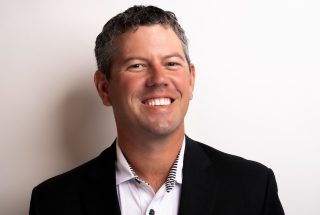

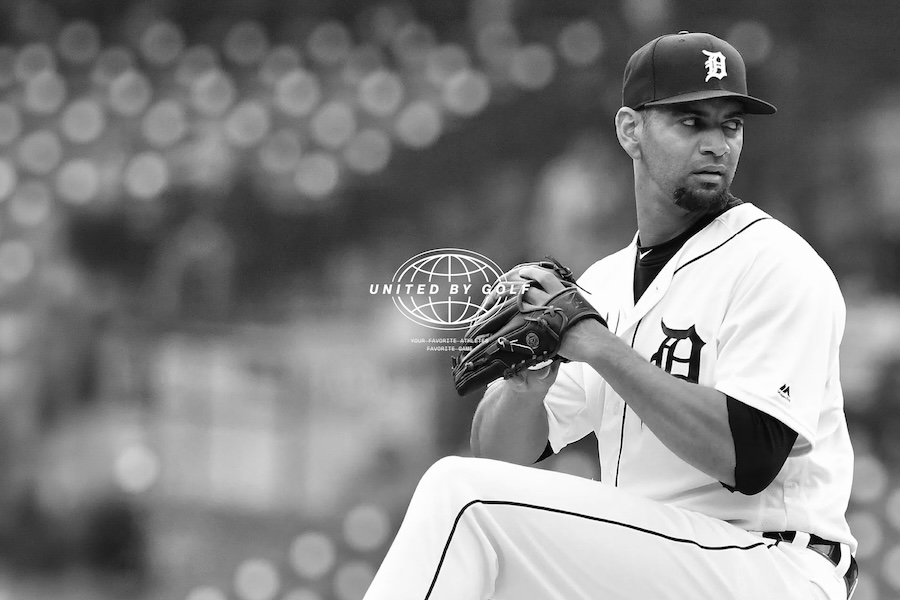
Even though Berkeley, California native Tyson Ross earned his way to become a National League All-Star pitcher in 2014, he still may not be considered the most accomplished person in his family. His father is a respected pediatrician, while his mother an emergency-room nurse. The Ross family has always been tight knit, though, so success was perhaps inevitable. While Tyson and his younger brother Joe – also a Major Leaguer – grew up playing baseball, Tyson went on to pitch at UC Berkeley, where he excelled with the Golden Bears.
Drafted by the Oakland Athletics in 2008, Tyson made his MLB debut in April 2010 and impressively struck out his first batter — future Hall of Famer Ken Griffey, Jr. He then spent parts of three seasons between the A’s and their triple-A affiliate Sacramento, posting an 11–5 record and 128 strikeouts in one standout season. In November 2012, he was traded to the San Diego Padres, a move that transformed him.
In 2014 – his All-Star season – Tyson notched a 13–14 record alongside an outstanding 2.81 ERA and 195 strikeouts across 195⅔ innings. The following year, he led the league with 33 starts, struck out a career-high 212 batters, and earned his second consecutive Padres Pitcher of the Year award. Unfortunately, his rising momentum stalled in 2016 when he underwent thoracic outlet syndrome surgery, requiring rib removal.
In the comeback and latter phases of his playing career, he pitched for the Texas Rangers, the Padres again, as well as the St. Louis Cardinals and Detroit Tigers before retiring—closing out a 10-year MLB career with a 44–70 record, 4.04 ERA, and 816 strikeouts.
But rather than fade quietly into retirement, he finished his degree in American Studies at UC Berkeley while working as a Special Assistant in Player Development for the Los Angeles Dodgers – a team he still works for. He also founded Loyal to My Soil, a nonprofit delivering free baseball and softball clinics in underserved Bay Area youth communities. These camps are led by former college and pro players and include coach training sessions and recovery clinics. Tyson has also become a mental health and performance advocate, partnering with a self-care studio to lead workshops for young athletes on recovery, meditation and resilience. Always the family man, he’s married and has two sons plus a rescue dog. In 2020, as protests ignited following high-profile police killings, he helped establish The Players Allianceaimed at improving diversity in baseball. His own nonprofit builds on that mission, bringing the joy of baseball to kids who might not otherwise have access.
He recently shared more about his story and how he enjoys giving back to the community – especially through golf.
What initially sparked your love for golf?
I started golfing as a kid. My dad’s two loves were coaching me and my brother in baseball and playing golf. So he got me out on the course early. I wasn’t patient. I played until I was about 13, and then kind of stepped away from the game and just focused on playing baseball for a long time. And I came back in 2017. I was coming off a rehab year – just had a major surgery. My career kind of fell off, and I decided to pick up golf figuring I needed to suck at something other than baseball right now. And that’s when I kind of fell in love with it. It was the camaraderie of getting out there with some friends, the constant challenge of trying to improve. It reminded me a lot of pitching, except I didn’t have a lifetime of experience, and I was basically starting at zero.
What translates from being an elite baseball player to becoming a more competitive golfer?
So many things. Baseball is a rotational sport, and so is golf. This ability to have some hand-eye coordination from my youth translates to the game, but the mental side of the game is something that I really enjoy. And that’s the part of baseball that I really loved – the ability to try and repeat your best effort over and over again. When you do something bad, how quickly can you bounce back from your mistake? Pitching and golf are really similar in those ways, and that’s something that I really enjoy. I wish I was better at it, but it makes me appreciate the game, just because even though I shank a shot, I can still recover. It’s not how good my best shot is, but how bad my worst ones are that determines exactly the day on the course.
Is it easier to find the strike zone or the fairway?
Strike zone. And a lot of times the batter helps bail me out and chase something. But getting off the tee is definitely the bane of my existence in golf right now, and it’s hard to slow down when you’re big and strong and you know you can hit it far, but it’s more about placement and distance.
What is Loyal to My Soil?
It’s a charity program I started during COVID. Essentially, we go around and host free camps for kids in underserved communities. Baseball and softball are the primary focus. I grew up in Oakland, California, playing youth baseball in the community. We had a great network of people, parents giving back, older kids umpiring, kids playing pick-up baseball on the side, having rundowns, watching other kids play. It was just kind of like a central hub in the community. And that league really died off. And a lot of pay-for-play sports have taken over. So I just wanted to give kids an opportunity, regardless of financial income or your parents, to get out and play the game, learn to love it, and build a community. We host a big annual golf tournament. It will be held November 3 this year at The Club at Ruby Hill in Pleasanton, California. If anyone wants to join us, it’s a lot of fun.
What drew you to TRUE linkswear, and what do you appreciate about the brand and the people there?
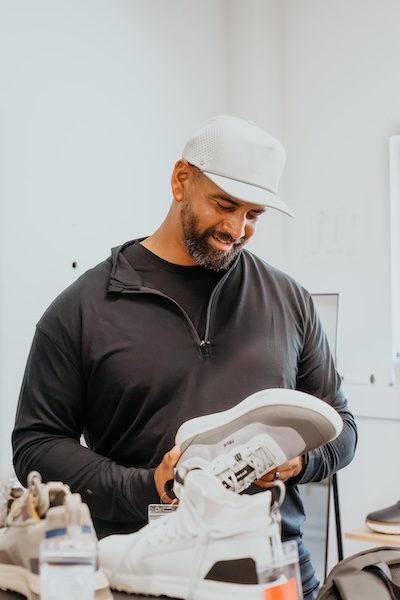
I’m a sneakerhead. I love shoes. Growing up, I had a big Jordan collection. I thinned it out, but I still have some. When I got into golf, of course, I saw Nike had Jordans with a bunch of spikes on the bottom, and I bought a bunch of them. I looked ridiculous on the course shooting over 100 with these $200 sneakers on and they weren’t very comfortable. And so part of my journey in athletics and training, I found the value of natural footwear, whether it’s wide toe boxes or zero drop. And I just came across TRUE back in the day, probably around 2020. I bought a couple pairs. And I was like, dude, these are amazing – the comfort, the style, the ability to wear on and off the course. It was just something that was really cool. It was a startup brand. And I was loyal. TRUE was kind of in that same branding scheme, if you will. And I just fell in love with the brand. Then they started rolling out clothing, which surprisingly fit me – I’m 6’6” tall and weigh 280 pounds, and golf apparel isn’t made for people my size. But I found things that worked and it was just a perfect fit.
When you’re watching PGA Tour pros on TV, what’s your biggest takeaway from seeing those guys perform at their peak level? And how do you associate that as a professional athlete?
I have such a deep appreciation for how easy they make it look. The elite of the league, whether you’re watching the NBA or baseball up close or golf on TV, their misses are so minimal. And even if they do miss, they’re able to have a safe miss. And so I think watching some of the times you hear things miked up in little clips, and I really appreciate their process of how they approach a shot, what they’re looking at, how they determine what they’re trying to do, and all the factors that go into it. And then to see them execute. Whereas I get a bad read on a rangefinder and just take a hack with my 7-iron. I know how big the gap is between how they’re playing the game and what I’m doing. But it’s pretty cool to see the pros do it, and it’s amazing.
How often do you play golf right now?
If I play four rounds a month, I’m in a pretty good spot. I’ve got two young kids at home, six and three and a half, and then I work in player development for the Dodgers. I fly all over the country and globe, really, working with different players. And actually when I’m on work trips, that’s my best bet for getting out and playing.
What’s your favorite golf memory so far?
That’s a good question. Two weeks ago, we went on a family vacation to Oahu, with my kids and then my parents. I played Ko Olina Golf Club with my dad and my six-year-old. Just the three of us, three generations hanging out in the cart. That was a good time.
Rumor is you’ve had a lot of funny golf miscue stories. Any you can share?
As I alluded to earlier, I played golf until I was about 13, and that’s when things ended. My sister had a soccer tournament in San Diego. My dad took me out golfing at the Omni La Costa Resort down there. And while unusual, San Diego had a little light drizzle that day, and I didn’t have a golf glove. I told my Dad I needed a golf glove. It’s wet. And he’s like, Hey, just shut up and hit the ball. So I take a swing, and the club slips out of my hand, flies down the fairway a bit and gets lodged up in a tree. That was the last time my dad took me golfing for a long time. But in a full-circle moment, I got married at like 32 at that same hotel. And our honeymoon suite overlooked that same fairway. And no, the club was not still up there.
Any long-term golf dreams?
Definitely to start playing more and take some golf trips with my friends. Right now, we all have young kids, and I’m traveling a bunch for work, so to be able to do a full golf vacation, like to St George, Utah looks really cool. My dad’s traveled all over the world. He went to Australia earlier this year for a week-long golf trip. He’s done St Andrews. He’s done all that stuff. I don’t need to go international but a weekend with the boys to get away and play some golf. And the par-3 course at Big Cedar Lodge in Missouri looks incredible. I’ve been seeing videos of that non-stop.
What would you like people to know about The Players Alliance?
It’s a fantastic group of current and former major league players, mostly of color, who are working to grow the game in their community. They’ve been doing tremendous work since its inception. They support programs like Loyal to My Soil with grant money and equipment, and it’s just a fantastic way of players taking charge and giving back to the younger generation.
Both of your parents got into medicine. Was that something you initially wanted to do, before you got into baseball?
I loved sports growing up. And obviously our home was a big medical household, so I figured I would blend in too. I was interested in sports medicine through high school. And I took the basic sports medicine class we had at Bishop O’Dowd High School. And then as my career went on, my natural curiosity allowed me to kind of look into different training modalities, and working with high-level physical therapists to try and be physically prepared and recovered to play my best. So I think having that medical background at home allowed me to see the game differently and really invest in my body along the way. But my sister followed my parents’ footsteps. She’s a pediatric doctor. I don’t think it’s genetic, I think she just worked incredibly hard.