By Jon Sherman, Practical Golf Founder and Ambassador for The Indoor Golf Shop
The golf tech industry has been moving fast this year. As someone who spends a massive amount of time analyzing, testing, and coaching with indoor golf setups, I’m always tracking how hardware and software evolve. The barrier to entry for high-quality data is dropping rapidly, and this year’s crop of launch monitors is proof that you no longer need to remortgage the house to get a highly accurate practice environment.
There have been some exciting launch monitor releases in 2026, with tech improvements that are shifting the landscape. I’ve seen three standout releases. The first is Shot Scope’s LM1 – at an accessible $200, it’s a massive win for everyday golfers. Not everyone can afford to drop thousands of dollars on a launch monitor, so it’s great to see the entry-level space get a quality injection. It’s a nicely polished, modern version of the PRGR, which has been a staple for years but to be honest lacks aesthetically. The LM1 is sleek, comes from a highly reputable company, and delivers accurate, foundational metrics like ball speed, club speed, and carry distance. I’ve done a lot of speed-training and wedge-distance work in the past with entry-level units, and the LM1 provides solid value for those specific baseline practices without any financial strain.
Then there’s the Garmin Approach G82. The company released the initial concept of this unit about six years ago, and I loved it then for its unique value proposition. You get a premium handheld GPS unit for the course paired with decent, reliable club and ball data. I’m a proponent of using GPS for course management, so combining that utility with launch monitor capability into one device is brilliant. It didn’t get a ton of media buzz, but it’s a fantastic, versatile upgrade.
But the release I’m most excited about is the Square Omni. I tested the original Square when it came out over a year ago, and my immediate reaction was, “Wow, we finally have a true camera-based indoor launch monitor at a sub-$1,000 price point.” However, it required specially marked balls, suffered from occasional misreads, and was strictly indoor-only. The new Square Omni is an unbelievable upgrade. The company packed in four high-speed cameras, added an on-unit display, and completely eliminated the need for marked balls. Testing it head-to-head against my premium Foresight GC3, the jump in accuracy was massive. It’s accurate, works outdoors now, needs no hardware subscription fees, and has full integration with GSPro – the gold-standard 4K software I personally use. For that setup though, you need to pay for a third-party GSPro license. It opens the door for a pro-level home simulation experience at a sub-$2,000 price point. That said, it’s a bit bulky, so it might not be your daily driving range companion. Plus, its native software is basic, it relies on a sometimes finicky Bluetooth connection instead of a direct PC wire, and you still have to put stickers on your clubface and shaft to get path and impact data. But for a primary indoor simulator, it’s a game-changer.
The biggest technological shift this year is the expansion of what budget units are attempting to measure, like angle of attack and impact location. However, there are right and wrong ways to do this. I give a high grade to the Rapsodo MLM2Pro. Rapsodo has been a hardware pioneer for a long time, and hasn’t rushed features out the gate. The company dialed in the hardware, secured Callaway RCT ball support to ensure indoor accuracy, and then rolled out club data updates responsibly once the algorithms were accurate.
Units from industry titans like Foresight and Trackman remain head and shoulders above the rest. When you buy into those top-tier ecosystems, you aren’t just paying for the cameras or radar – you’re buying fine-tuned, industry-validated mathematical algorithms that interpret data with flawless consistency. Their software ecosystems are elite, too. Trackman is essentially the Apple of the industry, with software that’s polished, closed-loop, and seamless. For clubfitters, teaching pros, and ultra-high-end home builds, premium commercial tech is still fully differentiated.
There are several upcoming products I’m eager to test, such as Rapsodo’s overhead launch monitor. The company teased an early demo unit at the PGA Show, indicating a potential launch later this year. Knowing Rapsodo, it won’t release a product until it’s flawless. Word is the company is building a dedicated PC-based simulation software to move away from mobile/tablet dependence, and I predict it will enter the permanent indoor simulator space at a highly disruptive, aggressive price point.
I’ve also seen buzz around the Par Breaker Swing Pulse X10, which hits a sub-$800 price point. It claims to utilize dual-camera tracking for live swing video analysis paired with its radar panel. I haven’t tested a unit yet, so I remain skeptical from a coaching standpoint, but it’s another intriguing entry on my radar.
The real battleground in golf tech right now is software. Companies like Uneekor are doing fantastic things with AI swing analysis that genuinely help players get better. Longtime heavyweights like SkyTrak are continually improving their native software, creating a closed-loop system that offers some of the most engaging practice environments on the market.
But simulated putting is where the industry still lags. Aside from high-end commercial tech like Sam PuttLab or Foresight GCQuad integrations, putting metrics remain rare. While the language for full swings is widely understood by players, that diagnostic clarity doesn’t exist for putting data yet. Most everyday golfers don’t have the technical knowledge to fix a putting stroke based on raw launch monitor numbers anyway, meaning true improvement there still requires a live instructor.
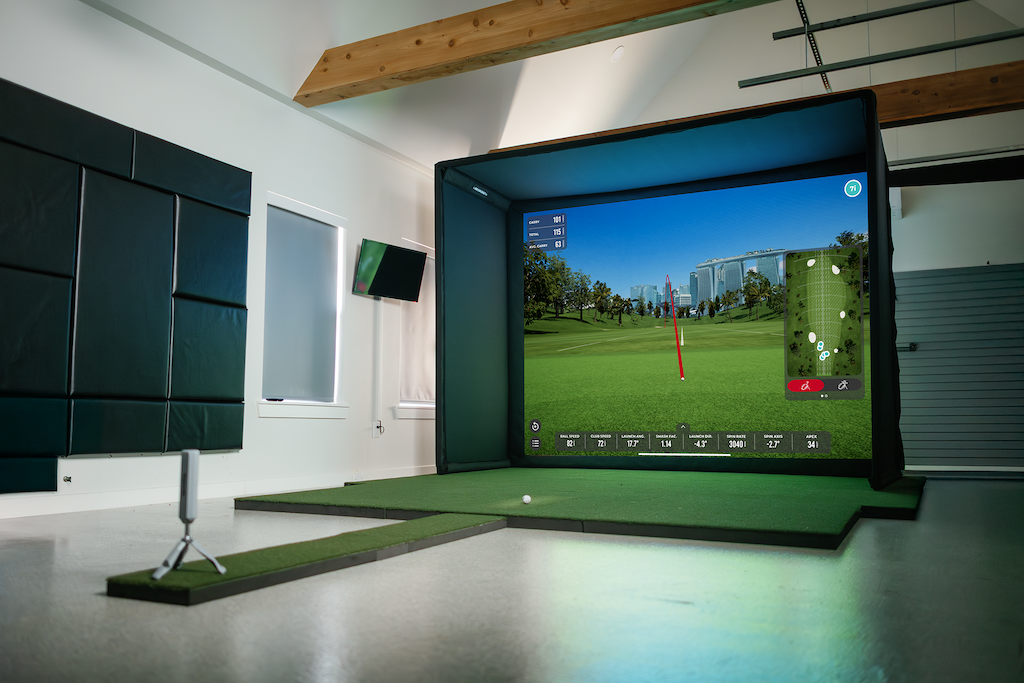
If I could make one direct request to golf tech manufacturers, it would be that we need more camera-based launch monitors under $2,000. Radar-based units are fine outdoors, but require a massive footprint – often 8 feet behind the ball and 8 feet in front. The average simulator in a garage or spare room doesn’t have that kind of space. Camera-based units solve the space issue entirely, but options are still too limited at lower price points.
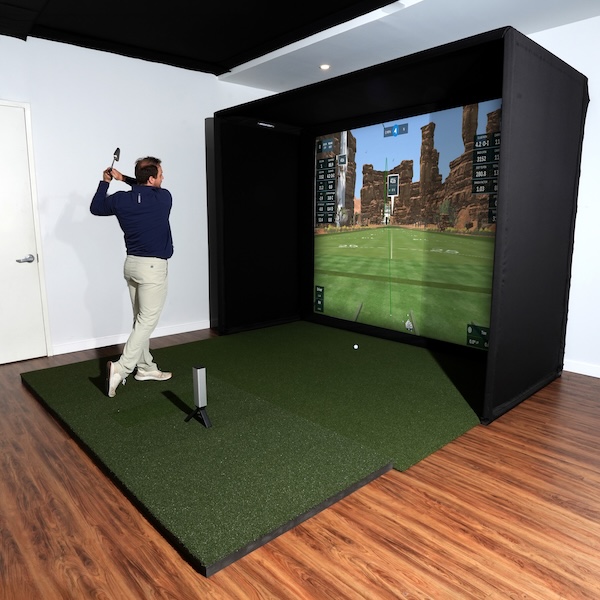
The simulator market is exploding because players in colder climates want to play and practice during the winter months. If we can get more affordable, camera-based hardware paired with intuitive software that teaches golfers how to analyze their data and practice effectively, the game will be in a much healthier place. Simulation is fun, but my ultimate goal is helping golfers hit the course and actually shoot lower scores.